AMITY-UNESCO RESULT
Answer: (Jarawa in Andaman, Lepcha in Sikkim,Jaunsari in Uttarakhand, Kondh in Orissa,
Bodo in Assam, Khasi in Meghalaya, Gond in Madhya Pradesh, Gaddi in Himachal Pradesh,
Rabari in Gujarat, Bhil in Rajasthan)
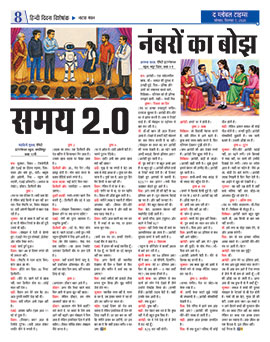
Wes couldn’t remember the last time he’d let himself think about his mother. In the era of the Thought Bank, memories were luxuries and emotions were liabilities. Every idea was scanned, taxed, and stamped with a value. As the Ministry liked to remind its citizens, “No thought is yours and no word is free.”
Any spark of creativity or nostalgia, could drain a person’s account dry. And the obedient Wes, had been conditioned to think in straight lines. Equations were safe. Algorithms were silent. Grief, however, was not.
His friend, Lila, often teased him about his mechanical calm. “One day,” she whispered during their shift at the AI Lab, “The Bank will drain you until there is nothing left to remember.” Wes’ muscles tensed and his implanted chip warned, “-0.5 credit”. “Better than going bankrupt,” he replied, keeping his voice flat as the mind-sensors pulsed.
As Wes spoke, he guarded a thought, an ember hidden within the folds of his mind. He protected it fiercely, burying it deep beneath the daily monotony: work, eat, sleep, code and repeat. It was the only thing the Thought Bank couldn’t price.
When the hospital called to say that his mother might not survive the week, the walls of his carefully built mental fortress began to crumble. Lila placed a comforting hand on his arm, “Wes, don’t let them take this from you.” He tried to smile, but his voice thinned. “If I think freely now, I’ll lose everything.” “Maybe,” she said softly. “Or maybe you’ll gain something.”
That night, when he went to the hospital, each step felt like it cost more than the last. His mother lay pale beneath the humming lights, breaths shallow and her eyes searching.
“Wes?” she whispered. Taking her frail hand, he unlocked the thought he had locked away for years. Memories flooded in an electric rush: his knees, as a boy, scraped from falling. His mother’s gentle hands brushing dust from his bruises; her laughter echoing in their apartment. The smell of vanilla cakes on the counter, and the way she tucked him in bed on stormy nights whispering - her love louder than the thunder. The sensors overhead blinked red: an unregistered surge of emotions detected. But Wes no longer cared. Tears blurred his vision as and grief dissolved into tenderness. His mother squeezed his hand, her smile soft as though she felt every memory he had unleashed.
“My boy,” she whispered. “Your thoughts were always yours.” As her hand turned cold in his, Wes understood the true cost, and the immeasurable worth, of one final thought.
Obituaries we never write
Noor Chawla, AIS Noida, X E
No candles, no prayers, no black parades
For ringtones lost in a phone upgrade
No tombstone etched for bedtime giggle
The one that faded mid-pillow squiggle
We mourn the loud, the public, the seen
But not the tears we shed at sixteen
Nor the ‘Mummy’ that slipped to ‘Mom’
A switch flipped, we never moved on
No eulogy for the dance left halfway
When your best friend moved towns away
Or that voice note you meant to keep
Till storage failed and fell too deep
Loss doesn’t always dress in veil or black
Often it’s something that won’t come back
A login, a laugh, a name we outgrew
Still breathing, but no longer true.